
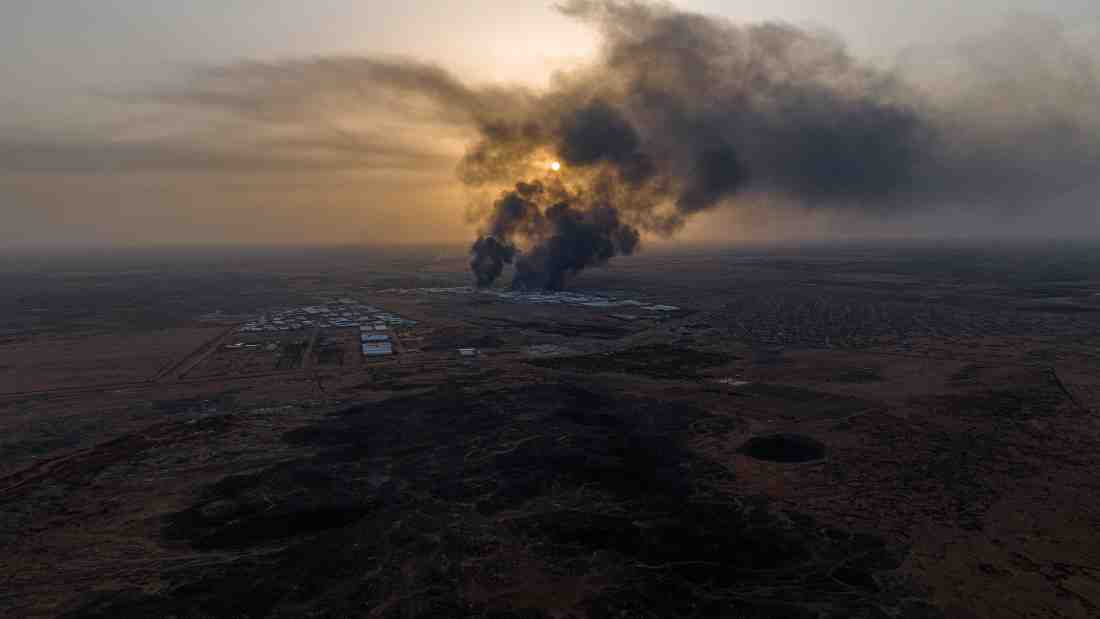
Our realities are constructed through the retelling of events, where particular elements of an experience may be highlighted and others may be discarded – narratives and their framing shape the world we live in.
The manner in which a narrative is framed transfers a notable amount of knowledge, not only that of a sequence of events but also what may be deemed significant to the informant by there being an emphasis or total extraction of a storyline.
This reality constitutes the way we as individuals communicate with one another – it is thus inescapable. By recognising this fact, one is able take a number of factors into consideration and form their own comprehensive understanding.
The aim of this essay is to discuss how focusing on the framing of conflicts could explain policy responses by utilising the Sudanese context between 1990-2005, as well as two Comprehensive Peace Agreements.
Knowledge, as Schneck (1987) explains, “is not so much a discovery, nor even an interpretation, as much as it is a product” (p.18) which informs one about the state of affairs and the different dynamics which may apply to them.
Thus, it can be said that the way events are packaged and delivered, wields a lot of power over one’s consciousness. Philosopher Michel Foucault explained this phenomenon through his theory on discourse. Foucault relates that the exercise of power is,
“a mode of action that does not act directly and immediately on others. Instead it acts upon their actions: an action upon an action, on possible or actual future or present actions” (Foucault, 2000d, p.304, cited in Flohr, 2016, p.42).
This indirect, complex, multidirectional and multifocal flow of power, which Foucault links to knowledge, results in the generation of discourse (Schneck, 1987).
Prevalent discourse constructs one’s realities and the knowledge one assimilates, empowering them to act. In fact, Foucault’s theory conveys that “The exercise of power consists in influencing or structuring the field of possible actions” (Flohr, 2016, p.46).
A connection is thus recognised not only between knowledge and power but also to responsibility.
When negotiating the field, especially one laden with conflict narratives, it is the responsibility of every individual to remain conscious of the power relations exists and the way these may be manipulated to deliver an opportunistic frame.
To assess the political situation, Foucault argues, one must look at the various cooperative power relations that are always occurring and distributed throughout a state’s social structure. (Flohr, 2016).
The field of possible actions could be considered as the ‘politics of meaning’ which create a realm in which the distributed knowledge influences one to act.
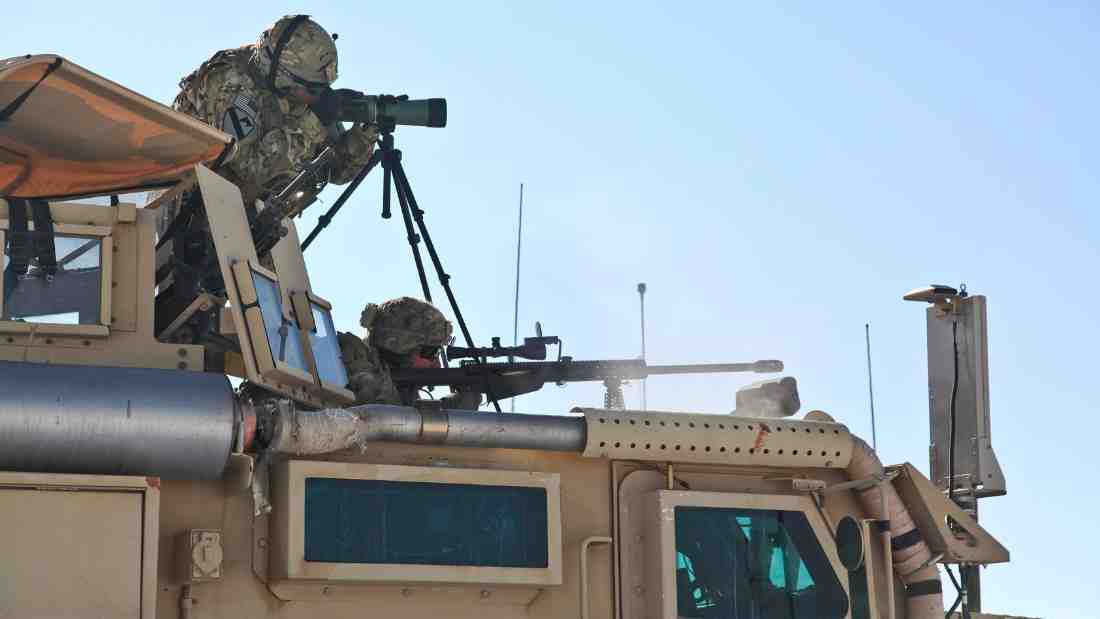
Eric Wolf’s (2002) framework maintains that power can be seen on four levels.
The first is the power which one exerts over oneself, where one is able to control their actions which will influence their future.
The second manifestation of power is relational, referring to the power one can exert over another person – this is seen on a microcosmic scale for example in a parent-child relationship.
The third is organisational power where there is social interaction between a larger group of people and the perceived hierarchy pulling the stings.
The forth power Wolf (2002) outlines is structural power – the power to construct the politics of meaning, thus referring to socio-cultural systems, for example identity and the roles ascribed to them.
Through this it can be seen that conflict framing and conflict is instrumental in understanding interactions, allowing incitement to occur and be acted upon. This idea is further explained by Desrosiers (2015):
“Framing theory contends that frames, when effective, allow framers and their publics to interpret particular circumstances as opportunities and turn these opportunities into a springboard for mobilisation. Framing results in identity-based violence when solidarity-mobilising, but more importantly action mobilising frames of an ethnocentric nature sufficiently align framers’ goals with publics’ views and resonate with a critical mass willing to take up arms” (p.121).
Through this it can be seen that conflict framing and conflict narration are instrumental in understanding interactions allowing incitement to occur and be acted upon.
Hutchinson’s (2002) paper studies the 1991-split within the SPLA/M (Sudan People’s Liberation Army/ Movement), a guerrilla group which emerged in 1983 in South Sudan when the Government in Khartoum introduced Sharia law (Mamdani, 2020).
The reason for the split within the SPLA is attributed to the diverging objectives which were being held within the army (Hutchinson, 2002).
The initial objective of the SPLA was to fight for the democratization and secularisation of Sudan since, in contrast to the Government and the northern population, most of the communities in south Sudan practiced Christianity or Animism (Haywood, 2014).
By 1991, however, there were varying views about the future of the south with some favouring secession from the north (Hutchinson, 2002).
The split was propagated by John Garang, a Dinka who served as the Chief for the SPLA/M and Riek Machar, a Nuer who went on to set-up SPLA-Nasir.
This fracture led to rising tensions and the need of ‘self-preservation’ (p.39) between the two leaders – this is when ethnicity was ultimately weaponised by both parties to mobilise their armies (Hutchinson, 2002).
Thus the original conflict narrative changed frame, where ethnicity was now the focus of contention.
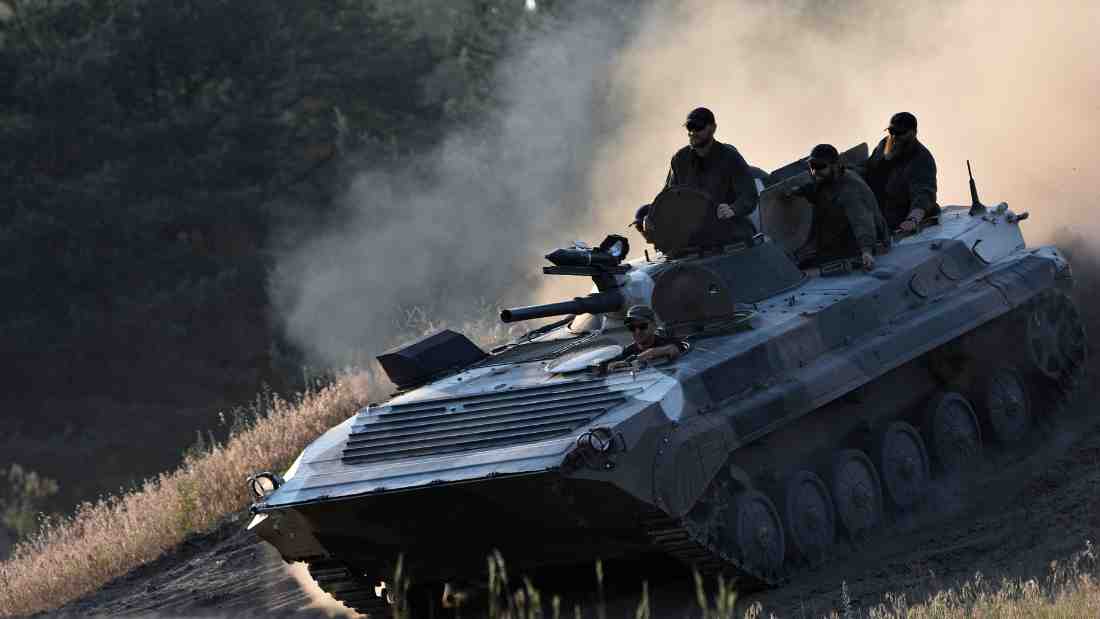
The increasing violence in the south morphed the ethnic Nuer identity and the ethnic relations which guided the Nuer and Dinka (Hutchinson, 2002).
Dinka, the largest ethnic group in South Sudan, largely practiced primordialism meaning that their identities were fixed and dictated by kinship relations.
Nuer, the second largest ethnic group in South Sudan, tended to exhibit a more ‘performative’ (p.43) approach in their construction of identity as it was based on certain characteristics that an individual possesses such articulation and ethical integrity (Hutchinson, 2002).
Therefore, any individual could become Nuer as long as they maintained these attributes and the two groups had heavily intermarried. This, however, shifted during the SPLM split where both groups gave extreme significance to relations that were bound by blood and intermarriage halted to reduce losing numbers within one’s own community (Hutchinson, 2002).
This shift was highlighted in the battle field where cultural rituals which previously drew boundaries between how one can kill and who one can kill were abandoned leaving women and children, who were once valuable assets, in a vulnerable state (Hutchinson, 2002).
Further to this, the discourse surrounding homicide also changed. Any restraint to killing which was previously practiced due to divine fear was wiped away since as, Hutchinson (2002) relays,
“the SPLA leadership was arguing that the overarching political context of the present war should take precedence over the personal identities and social inter-relations of the combatants in people’s assessments of the social and spiritual ramifications of intra-ethnic homicide” (p.46).
The above statement highlights the way ethnic discourse was changed to incite and mobilise the army utilizing both organisational and structural power.
In a paradoxical manner, ethnicity was accentuated and forsaken. The narrative constructed by the two military leaders was one of ethnicity but what was emerging was the reconstruction of ethnicity to suit the narrative.
Kaufman’s (2006) assessment of the symbolic politics theory is interesting to take into consideration since whilst there is a shift in the cultural discourse, is it very evident that there is a deeply human factor in the manner in which the members of the warring factions compromised their ethnic identity to secure self-preservation.
Another key player was the Government of Sudan which welcomed the rift inside a powerful military group like SPLA/M and seemingly sought to exacerbate it by engaging in peace talks with Machar who had nowhere else to turn by 1992.
Machar’s SPLM-Nasir had gone through a number of cosmetic changes by 1994 as his faction had been experiencing internal rifts with no external backing (Johnson, 2016). It was newly styled under the Southern Sudan Independence Movement/Army (SSIM) (Hutchinson, 2002).
The April 1997 Peace Agreement was signed by the National Islamic Front (NIF)(the Government of Sudan) and the SSIM and a number of other factions (Haywood, 2014).
As a result, the SSIM was absorbed into the Sudanese army and Machar was compelled to convert to Islam and abide by its teachings (Hutchinson, 2002).
In return, the Government of Sudan offered a weak statement on the continuation of talks on Southern Sudanese ‘self-determination’ (Hutchinson, 2002).
It is interesting to note that whilst the conflict was framed as ethnically driven, the leader of the Nuer faction let go of a major part of his identity and led his army into joining forces with the group they sought independence from.
That being said, it is also important to note that by this time, there had been a number of changes in the structure of the army due to defections meaning that a greater emphasis could be placed on loyalty to Machar rather than to ethnic identity (Johnson, 2016).
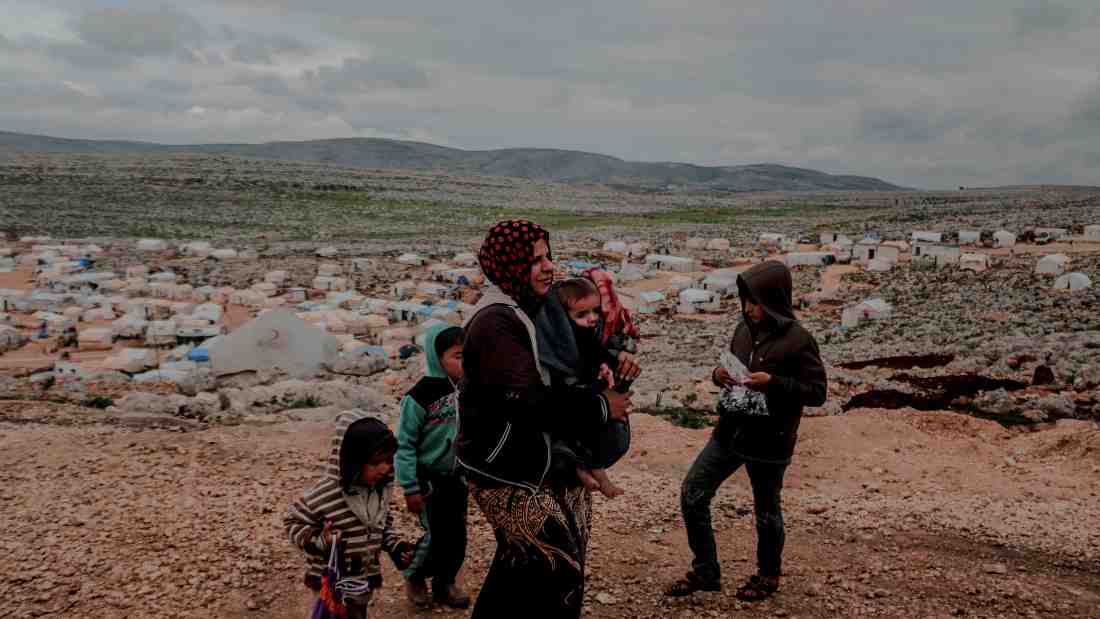
One is thus presented with a triangle of warring actors. The violence was being justified through identity discourse – the south at odds with the north due to different systems of belief and practices; and the southern armies at war amongst themselves due to ethnic conflict.
However, in the midst of these identity narratives, a significant economic factor was rapidly intensifying.
Oil exploration in the region had begun in 1959 but it wasn’t until 1982 that a great supply was found in the Western Upper Nile by foreign conglomerate, Chevron – this area became the main site for oil exploration (Wesselink et Weller, 2006).
This means that in the advent of Sudan’s independence from colonial rule, the young country had had this oil issue brewing on high heat. Before Chevron’s business exploits could be fully realised, the company had been plagued by a number of disruptions caused by the unstable situation in Sudan (Wesselink et Weller, 2006).
By 1990, after the coup d’état that brought Omar al-Bashir into power, the NIF pressured Chevron into abandoning their operation completely – leaving a money-making venture up for grabs and the area in a devastating state (Wesselink et Weller, 2006).
Oil exploration requires land and in the Sudanese case, the area of interest was occupied by Dinka and Nuer. This decade was marked by the Government’s desire to get this oil operation going and turn it into a successful venture, however the violent conditions left this hope unrealised for a long time (Wesselink et Weller, 2006).
After 1999, the Sudanese oil market gained greater traction with the newly operational Greater Nile Oil Pipeline which extends from the Heglig oil reserve in South Kordofan to the Port Sudan oil refinery – inextricably linking Sudan and south Sudan together.
Hutchinson (2002) notes that the 1997 Agreement was considered to be a ‘dead issue’ (p.43) since a high level of violence continued to ensue for a number of years as the
Government troops were directed to invade the Western Upper Nile area where the oil fields were located. However, one could argue that it was far from a dead since it’s repercussions continued to have significant consequences as the situation was aggravated after the oil fields were virtually handed over to the Government once Machar signed the Agreement (Johnson, 2016).
This resulted in the death and displacement of many Nuer and prolonged the war with the SPLM (Wesselink et Weller, 2006). Johnson (2016) relays that there was a lot of internal fighting amongst the Nuer factions with Machar having lost a lot of his power by this point. It is important to note that there was a lot of division between several factions during this period, a reason Haywood (2014) cites as having led to failure of the 1997 Agreement.
The southern factions started to realign at the end of the millennium with the 1999 Wunlit conference leading to a peace agreement (Johnson, 2016). It would take until January 2002, however, for Machar and Garang to reach a compromise and seek self-determination for the south after Machar cut ties from the government (Johnson, 2016; Haywood 2014).
Garang engaged in peace talks with President Al-Bashir which led to the 2002 Machakos Protocol, where south Sudan’s right to ‘self-determination’ was recognised.
This was further strengthened by the 2005 Comprehensive Peace Agreement which was signed by the SPLM’s Garang and the Government of Sudan which was mediated by international actors. This was the first agreement that truly paved the way for an independent South Sudan with a timeline for a referendum and a stronger plan for power sharing with regards to oil wealth which Haywood (2014) marked as a paramount difference between the 1997 Agreement and the 2005 CPA.
The timing and framing of these agreements may also have been influenced by issues arising external of Sudan. A major Western influence during the 2005 CPA was the United States (Rolandsen, 2011).
Contrary to popular belief, The U.S. was not thoroughly invested in the affairs and rapid changes that had surpassed in Sudan in the ‘90s (Evans, 2002). This is discombobulating in light of the U.S. bombing which occurred on the 20th of August in 1998 which was supposedly provoked by the attack on two U.S. embassies in Africa (Evans, 2002).
During this decade, many of the key actors in Sudanese conflicts were considered to be war criminals for the atrocious acts they had committed and this allowed the U.S. to a gain significant hold on the government in Khartoum which was deeply invested in their economic ventures which did require international investors (Evans, 2002).
Whilst the Clinton administration did not necessarily act on this leverage, apart from applying pressure to stop harbouring al-Qaeda leader Osama Bin Laden, there had been ongoing pressure from activists to act against Sudan’s Islamic Regime who had been committing grave crimes against Christians (Evans, 2002).
This changed with the advent of the ‘war on terror’ after the September 9th, 2001 terrorist attack which marked a significant shift in global politics. The newly instated Bush administration cracked down on the Sudanese Government who still had connections to Bin Laden, despite his expulsion in 1996, by freezing foreign assets (Astill, 2001).
This caused the government to undergo a public campaign to loosen its image as a Jihadist regime and prove to the U.S. that it held no connections to terrorism by condemning the attack (Astill, 2001; Evans, 2002).
As mentioned above, however, the story on the ground was quite different with many still being persecuted on the basis of religion (Evans, 2002). There were also external pressures that the U.S. was facing to remove sanctions to continue to secure oil from Sudan.
Ultimately, the Bush Administration engaged in talks to unify Sudan when the previous administration had indirectly backed the SPLA (Haywood, 2014). Eventually, unity was no longer pursued but the U.S. acted as an important mediator for the 2005 CPA where wealth sharing was a major topic (Rolandsen, 2011).
Interestingly, despite this attempt of reputation laundering by the Sudanese government to allow religious freedom, the National Congress Party (previously the National Islamic Front) seemed to be satisfied with separating from the south, allowing Sudan to fully realise their Islamic identity (Rolandsen, 2011).
The 2005 CPA decreased the level of violence during the next few years, however the manner in which it was implemented was not the most transparent and it could be argued that this Agreement was made in the spirit of exclusion rather than inclusion.
As previously stated, the 2005 CPA was signed by the Government of Sudan and SPLM/A excluding other organisations that existed and issues that were left unresolved (Pendle, 2023).
The people of south Sudan were thrust into an age that advocated peace whilst facing several daily hardships. The peace discourse framed anyone who voiced their concerns as an enemy of peace despite the fact that there were individuals that were returning to a land which was destroyed by oil exploits (Wesselink et Weller, 2006) and other individuals who were left unsure as to the status of their land (Pendle, 2023).
This seemed to be a product of the Agreement’s design since as Pendle (2023) recounts, many Sudanese who should have been part of a significant document were not even allowed to enter the room in which negotiations were taking place with foreign moderators, despite having travelled far to do so.
Furthermore, the fact that the negotiations took place at a luxurious hotel whilst excluding the majority of stakeholders, created an elite group which could be backed by the discourse of legitimacy (Pendle, 2023).
This was very significant when considering that the individuals in the elite group, considered to be war criminals, were awarded a clean slate, allowing them to evade punishment for their actions (Pendle, 2023).
Pendle (2023) notes that whilst the SPLM/A had previously performed the part of controlling the state by collecting taxes and controlling organisational structures, the 2005 CPA automatically recognised them as the legitimate authority.
Further to this, the formation of an elite group was reinforced by the exclusion of civil groups within south Sudan who could not gain access to the document which was limitedly distributed and was written in a manner that would remain incomprehensible to a majority of the community leaving them to remain naïve when it came to understanding their rights (Pendle, 2023).
There is a sense of structural symbolic violence in the compilation of this document since the grievance of exclusion on the basis of the cohort one forms part of was relived.
As Sefa-Nyarko (2016) relates there seems to have been a lack of consideration for the structural and symbolic politics which surrounded the Sudanese case by the international mediators who focused heavily on the economic considerations in the 2005 CPA.
Moreover, many problems related to land were not resolved for the civilian community and their symbolic ties to certain areas for certain communities was not restored, begging the question as to whether the issue of ethnicity was ever genuinely employed by those within the SPLM/A (Kaufman, 2006; Pendle, 2023).
Despite the many changes that have occurred in the Sudan region to date, such as, the secession of South Sudan in 2011 and the several changes of leadership in Sudan and South Sudan, there still remains a great desire of democratisation, security and freedom.
Unfortunately, both Sudan and South Sudan are experiencing problems related to legitimacy, dictatorship and distrust with a lack of civilian voices being taken into consideration whilst vast atrocities continue to occur (HRW (2023a); HRW (2023b)).
The historic narrative of the Sudanese area has been defined by its various oppressors, slavery, colonialism and ethnic dispute, which are often insensitive to the rich and diverse cultures that exist and continue to exist within the area (Mamdani, 2020).
The narrative created through this historic discourse has done little to aid the state of governance in both nations and has hindered them from moving forward. There is a structural power that pervades the actions of leaders with a deeply embedded fear that propagates instability.
It is well documented that the approach used during the colonial period to maintain control over the ethnic groups and their lands was deeply flawed (Mamdani, 2020) and for this reason Zambakari (2015) maintains that moving forward these two States should move away from these models that never served them. Zambakari (2015) advocates that by building a democratic state would allow diversity to flourish in its own right but refurbishing the state on ethnic lines has continued to cause more problems. However, for this to happen the discourse needs to change and the unending conflicts need to be deeply examined from various angles.
In conclusion, it is imperative that discourses are examined and policymakers maintain vigilance when taking conflict narratives and their framing into account as the repercussions may effect communities at varying degrees. The Sudanese case shows that there are different ways a war could be interpreted and that this could be weaponised by both governments and policy makers.
References
Astill, J. (2001) “Osama: the Sudan years”, The Guardian, 17 October 2001. Available at: https://www.theguardian.com/world/2001/oct/17/afghanistan.terrorism3 (Accessed: 16 March 2024).
Desrosiers, M. (2015). “Tackling Puzzles of Identity-Based Conflict: The Promise of Framing Theory”, Civil Wars, 17(2), pp.120-140, DOI: 10.1080/13698249.2015.1070449
Evans G. J. (2002). God oil and country : changing the logic of war in Sudan. Belgium: International Crisis Group.
Flohr, M., 2016. “Regicide and resistance: Foucault’s reconceptualization of power”, Distinktion: Journal of Social Theory, New York: Routledge, 17(1), pp.38-56.
Haywood, K. (2014). “Comparing the SPLA’s Role in Sudan’s 1997 and 2005 Comprehensive Peace Agreements”, African Studies Review , 57(3), pp. 143-165.
Human Rights Watch (2023a) ‘Sudan: Events of 2023’, in World Report 2024. Available at: https://www.hrw.org/world-report/2024/country-chapters/sudan (Accessed: 18 March 2024).
Human Rights Watch (2023b) ‘South Sudan: Events of 2023’, in World Report 2024. Available at: World Report 2024: South Sudan | Human Rights Watch (hrw.org) (Accessed: 17 March 2024).
Hutchinson, S., 2002. “Nuer Ethnicity Militarized”, The Anthropology of Politics: A reader in ethnography, theory and critique, edited by Joan Vincent. Boston: Blackwell Publishing, pp.39-52.
Johnson, D. H. (2016). “The Segmentation & the Nuer Civil War of SPLA-United” in The Root Causes of Sudan’s Civil Wars: Old Wars and New Wars. UK: Boydell & Brewer, pp. 111-126.
Kaufman, S. J. (2006). “Symbolic Politics or Rational Choice? Testing Theories of Extreme Ethnic Violence”, International Security, 30(4), pp. 45-86.
Mamdani, M. (2020). ‘Sudan: Colonialism, Independence, and Secession’ in Neither Settler nor Native: The Making and Unmaking of Permanent Minorities. US: Harvard University Press, pp. 196 -149.
Pendle, N. R. (2023). “The 2005 Comprehensive Peace Agreement” in Spiritual Contestations – The Violence of Peace in South Sudan pp. 119–134. United Kingdom: Boydell & Brewer, pp. 119–134. DOI: 10.2307/jj.9192210.12
Rolandsen, Ø.H. (2011). “A quick fix? A retrospective analysis of the Sudan Comprehensive Peace Agreement”, Review of African Political Economy, 38(130), pp. 551-564, DOI: 10.1080/03056244.2011.630869
Schneck, S. F., 1987. “Michel Foucault on Power/Discourse, Theory and Practice”, Human Studies, New York: Springer, 10(1), pp.15-33.
Sefa-Nyarko, C., 2016. “Civil war in South Sudan”, African Security, 9(3), pp.188-210.
Wesselink, E. and Weller, E., 2006. “Oil and violence in Sudan: drilling, poverty and death in Upper Nile State”, Multinational monitor, 27(3), pp.44-49.
Wolf, E., 2002. “Facing Power – Old Insights, New Questions”, The Anthropology of Politics: A reader in ethnography, theory and critique, edited by Joan Vincent. Boston: Blackwell Publishing, pp.222-232.
Zambakari, C. (2015) “Sudan and South Sudan: identity, citizenship, and democracy in plural societies”, Citizenship Studies, 19:1, 69-82, DOI: 10.1080/13621025.2015.988481

Hannah Cassar holds a Bachelor of Arts (Hons) in Anthropology from the University of Malta, and is currently pursuing a Master of Science in Humanitarianism, Conflict, and Development at the University of Bath.
She is a Research and Policy Officer with the Malta Further and Higher Education Authority, and also a council member of the Malta Anthropological Society, where she focuses on promoting research and awareness about anthropology, facilitating discussions and events that engage the public in anthropological topics and foster a greater appreciation for the discipline.