
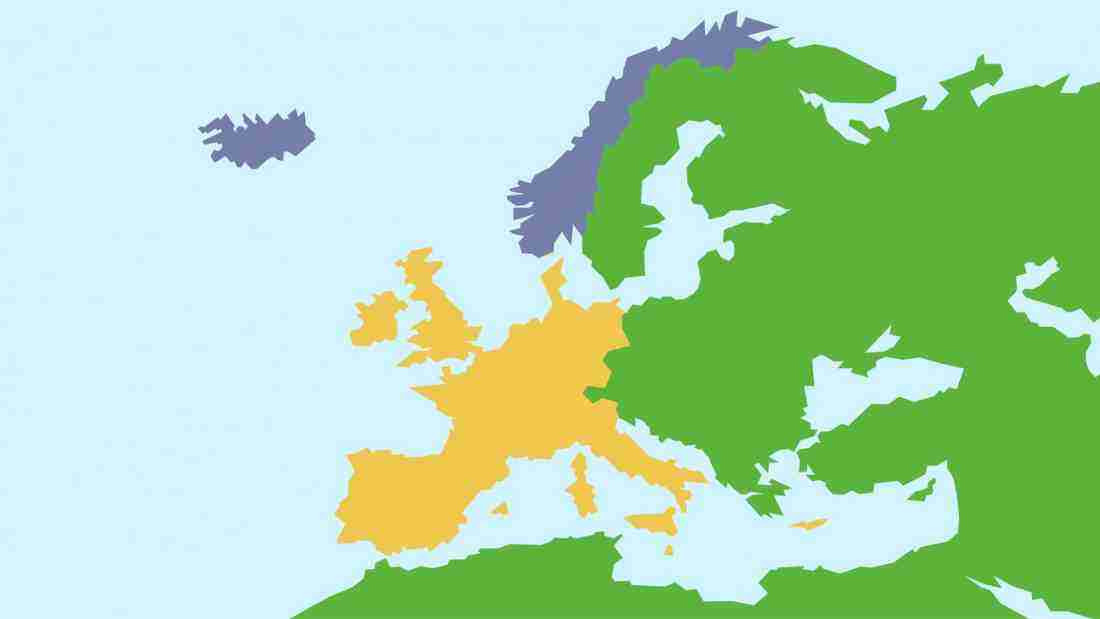
Current political issues in the Mediterranean region are influenced by religion, identity politics, and territorial disputes.
These issues often overlap, with some groups feeling a stronger sense of ownership over them.
Key factors include identity markers such as language, religion, and affiliation, along with the geographic location and neighbouring territories.
Disputes over resources, both natural and human-made, are common, and external influences often lead to proxy conflicts.
While historical and stable resources remain constant, recent changes, such as the impacts of climate change on resource access, highlight the ongoing flux in these dynamics.
International Relations Frameworks
International relations theories provide frameworks to understand these issues.
Two main branches are prominent.
The first includes theories focused on power relations at both international and state levels, involving entities like the European Union and the Union for the Mediterranean.
The second includes Mediterranean studies, encompassing historical, literary, postcolonial, post-structural, and constructivist approaches.
Traditional realist theories view states as stable entities with clear, long-term strategies (Chernoff, 2007).
The English School approach emphasises the role of institutions within and between states, offering tools to explain international relations dynamics (Devlen et al., 2005).
Mediterraneanist approaches, in contrast, focus on social and cultural dynamics, paying close attention to historical developments.
These approaches can sometimes essentialise the region, but they provide critical insights into the interplay of culture and politics.
Postcolonial theory, in particular, critiques state-centric views and emphasises cultural identity politics (Seth, 2011).
Strengths and Limitations of the Theories
Each theory has strengths and limitations.
Realism helps understand state behaviour based on rationality but overlooks intra-state social and cultural factors.
The English School incorporates the role of institutions, while Mediterraneanist approaches offer dynamic, culturally inspired perspectives that account for the diverse challenges faced by communities in areas like culture, religion, education, health, gender rights, media, and economics.
Intercultural politics elicit mixed reactions, with recent global events highlighting both conflict and the richness of diversity in political approaches.
Political challenges and benefits are intertwined with trade, economic development, education, environmental projects, and cultural exchange.
The Mediterranean’s identity is dynamic and continuously evolving, shaped by diverse discourses and perspectives.
Applying theory to practice is complex due to the region’s varied constructs.
A significant challenge is reconciling differences among European territories, Balkan states, Turkey, Middle Eastern Arab countries, Israel, North Africa, and the
Gulf States.
The concept of agenda-driven and competing interpretations plays a key role in constructing Mediterranean narratives, often to gain specific advantages.
The Mediterranean’s political and cultural significance has grown, exemplified by the Arab Spring’s social upheaval and promising prospects (Pastori, 2021).
However, the region still often remains at the receiving end of influences from larger powers.
To gain more control over policies affecting their lives, Mediterranean communities need innovative thinking and new strategies.
Efforts to integrate international relations and Mediterranean studies have grown, enhancing dialogue and critique of the ‘exceptionalism’ applied to the Mediterranean, particularly regarding Arab populations (Carrera, 2011).
This approach challenges stereotypical and imperialistic interpretations and calls for a nuanced, multi-layered analysis.
The development of global international relations has contributed significantly to this integrated approach, though reconciling conflicting narratives remains complex.
The Mediterranean’s geopolitical space and existing scholarly approaches present significant challenges.
Early international relations language was designed for the U.S. and its allies, resonating in the Mediterranean due to the dominance of Western powers.
However, it failed to capture regional differences.
Recent developments in international relations attempt to address these differences without falling into exceptionalism.
Traditional realist and liberal paradigms focused on state behaviour and power distribution, often overlooking local conditions.
Realists emphasised anarchy and balance-of-power politics, while liberals focused on cooperation and institution-building.
Despite this, Mediterranean studies scholars highlight the importance of material interests, identity, and domestic concerns alongside international dynamics.
Realist elements remain relevant, as power and security are crucial in the Mediterranean’s international system.
Conflicts like the Arab-Israeli and Iran-Iraq wars followed balance-of-power politics (Payne, 2012; Smith, 2016).
The security dilemma, where states’ efforts to maximise security leads to increased hostility, remains a key concept.
Constructivist Theory
Constructivist theory has become a significant research area in Mediterranean studies (Blanc, 2023; Zemni, 2004).
Constructivists argue that states develop identities and interests through interactions, challenging the generalisation of rivalry and mistrust proposed by structural realists.
They believe that states and institutions co-evolve, with meaning, context, and identity shaping politics.
This perspective emphasises the role of norms and cultural factors, including history, tradition, collective memory, religion, rituals, and intangible heritage, in shaping state behaviour and relations.
The Impact of the Cold War
The Cold War significantly impacted the Mediterranean’s intercultural politics, reflecting and challenging existing cultural identities and allegiances.
The main divide between the West and the Soviet Union influenced Mediterranean allegiances, which shifted based on ideological and strategic benefits to ruling powers.
This influence spanned from WWII to the early 1990s and continues to resonate today.
Southern Europe, particularly marked by Cold War alliances, showcased the interplay between international and national politics.
Greece experienced coups and democratic limitations but remained a U.S. and NATO ally, encapsulating the Western Balkans and Eastern Europe within the Iron Curtain.
In the Middle East and North Africa, states frequently shifted allegiances based on historical and traditional alliances, ethnicity, religion, and cultural customs.
Recent scholarship emphasises viewing this period within the broader context of decolonisation rather than a binary US/USSR divide (Taunton, 2023).
Factors such as European colonial legacies, Ottoman-era influences, and inter-religious strife heightened tensions.
The superpowers understood the importance of socio-historical and cultural elements in the Mediterranean.
Post-WWII, traditional ties were maximised, but optimism towards European rulers and later U.S. and Soviet influence often led to disappointment.
U.S.-Israel relations stood out due to strong cultural, economic, religious, diasporic, and political links, sometimes in opposition but often in collaboration with Arab states (Tal, 2021).
Conflicts in Iran and Greece were early Cold War manifestations in the Mediterranean.
In Greece, communists gained power after resisting Nazi occupation but opposed the American-backed return of the exiled king (Stergiou, 2008).
Simultaneously, the USSR sought oil concessions in Iran, where autonomists pushed for greater control (Alvandi, 2014).
The decline of Britain and the rise of the U.S. led to the Truman Doctrine in 1947, promising support to Greece and others through financial, military, and political intervention, contrasting with totalitarian regimes.
Transformation of the World Order
One of the most influential works in Mediterranean studies is Huntington’s (1996) The Clash of Civilizations and the Remaking of World Order.
Huntington argues that, for the first time in history, global politics is both multipolar and multicivilizational.
He distinguishes modernisation from Westernisation, asserting that modernisation does not lead to a universal civilisation or the Westernisation of non-Western societies.
He notes a shift in the balance of power among civilisations: the West is declining while Asian civilisations are expanding their influence.
Additionally, Muslim countries are experiencing rapid demographic growth and reaffirming their cultural identities.
Huntington acknowledges the limitations of his paradigm but defends its utility in providing a broad yet comprehensible framework for interpreting global politics.
His concept of civilisation, derived from 18th century France, contrasts civilisation with barbarism, characterising civilised societies as settled, urban, and literate.
This notion historically justified European colonialism and social practices, providing a standard for judging societies.
While no universally accepted definition exists, the concept of civilisation still helps organise behaviour and standards of living.
Religion plays a crucial role in defining civilisations, with strong links between major religions and the civilisations Huntington describes.
He highlights how the spread of religion often accompanied the movement of people and goods, frequently through violent means. European Christendom emerged as a distinct civilisation in the 8th and 9th centuries, initially lagging behind others.
However, by the 16th century, Europe’s cultural renaissance, advancements in social structures, commerce, technology, and warfare led to global dominance, providing a strategic advantage that lasted for centuries.
Huntington’s world view faces critiques, notably from civilisational dialogue initiatives, which aim to prevent state clashes but often prioritise state security over other referents.
Proponents of critical security studies argue that these initiatives neglect the insecurities of individuals, social groups, and the global environment (Bilgin, 2014).
This perspective broadens the concept of security, challenging the traditional focus on sovereign states and militarised approaches.
Instead, it emphasises the need to reconceptualise security to include various referents and reject zero-sum practices.
Critical security studies highlight the inseparable link between theory and practice, stressing that focusing solely on state security can negatively impact the security of individuals and social groups.
In the context of Mediterranean intercultural politics, this micro-level focus on individual and group security is crucial.
The Impact of Culture
The role of culture in political reform in the Mediterranean has a long history.
Cultural identity, social functions, political beliefs, affiliations, religious values, and everyday practices influence the desire to change political structures.
These factors contribute to cultural development on both micro and macro levels.
Religion significantly shapes policies towards intercultural political exchanges.
Many Mediterranean states use religious representation to structure intercultural politics, impacting foreign relations.
For instance, Balkan relations are influenced by religious and political interests amid EU integration, while Islam helps Arab states establish cultural and political links, complicating relations with Israel due to historical, cultural, and military factors.
Recent social unrest in the Mediterranean includes economic and political protests in Southern Europe and the Arab revolutions since 2011.
Early 21st-century Middle Eastern demonstrations by labour and economic sectors highlighted discontent with high unemployment and economic reforms (Pastori, 2021).
Governments’ suppression of secular political dissent bolstered Islamist movements, which gained support by addressing political and economic issues through a religious lens.
Nationalism
In the age of nationalism, communities seeking statehood create shared national identities.
Western-imported modern nationalism complicated nation-building in the Middle East and North Africa, where state and sub- or supra-state identities often clash.
Historically, loyalties were tied to cities, tribes, and religious sects rather than nation-states.
The region’s diversity and the Ottoman Empire’s multi-communal structure further challenged nation-building (Dodge, 2020).
Western-imposed state systems and arbitrary boundaries after WWI fragmented the region, cutting across sub-state identities and conflicting with emerging supra-state identities like Islam and Arabism.
The rise of Nasser and conflicts with Israel fostered a more assertive Arabism, bolstered by middle-class political mobilisation and Western resistance (Jillani, 1991).
Egyptian teachers, mass media, and later satellite TV and the internet, helped spread and reinforce a pan-Arab identity, sharing values, meanings, and reference points across borders.
Although a homogenous Arab world is difficult to argue for, the intercultural politics between Arab states have developed into a complex web influenced by religion, language, history, colonialism, and culture.
Identity politics play a significant role in the successes and challenges of intercultural politics in the Middle East.
Despite predictions of its decline, Arabism persists, intertwined with Islamism and fluctuating in influence. Arab and Islamic identities have converged in foreign politics.
Although Arabism was sidelined by state policymakers in the 2000s, it remains strong among the public, merging with Islamism.
This trend has weakened since the Arab Spring, with Arabism giving way to Islamism and nationalism (Cherif, 2023).
State elites use socialisation tools like mass media, education, and job opportunities to build identities supporting their own state and opposing others.
Supra-state identities like Arabism and Islamism legitimise such practices, as seen in Saudi Arabia’s claim to champion Islam.
Conclusion
The complex interactions between religion, identity politics, and territorial disputes are highlighted by the complicatedness of political processes in the Mediterranean region.
These issues defy easy solutions and reflect the wide range of variables affecting the sociopolitical climate in the area.
The convergence of theories from Mediterranean studies and international relations provides insightful knowledge of these complexities and highlights the importance of utilising nuanced, culturally sensitive viewpoints.
While there are still obstacles to overcome in this regard, current attempts to combine different methods provide hope for more thorough evaluations.
The Mediterranean’s dynamic identity, which is moulded by both modern and historical influences, emphasises how important it is to use adaptive thought processes when negotiating the region’s political landscape.
References
Alvandi, R. (2014) ‘Iran and the Cold War’, Iranian studies, 47(3), pp. 373–378.
Bilgin, P. (2014) ‘Dialogue of civilisations: a critical security studies perspective’, Perceptions (Ankara, Turkey), 19(1), pp. 9–24.
Blanc, E. (2023) ‘The EU in motion through emotions: Fear and migration policy in the Euro-Mediterranean context’, Mediterranean politics (Frank Cass & Co.), pp. 1–26.
Carrera, S. (2011) ‘Exceptionalism and its Impact on the Euro-Mediterranean Area’, in Europe’s 21st Century Challenge. Routledge, pp. 223–238.
Cherif, Y. (2023) ‘Neo-pan-Arabism: a renewed contract of legitimacy in the Maghreb’, Revista CIDOB d’afers internacionals, (135), pp. 95–114.
Chernoff, F. (2007) ‘Critical Realism, Scientific Realism, and International Relations Theory’, Millennium, 35(2), pp. 399–407.
Devlen, B., James, P. and Özdamar, Özgür (2005) ‘The English School, International Relations, and Progress’, International Studies Review, 7(2), pp. 171–197.
Dodge, T. (2020) ‘Introduction: Between Wataniyya and Ta’ifia; understanding the relationship between state‐based nationalism and sectarian identity in the Middle East’, Nations and nationalism, 26(1), pp. 85–90.
Huntington, S.P., 1996. The Clash of Civilizations and the Remaking of World Order. New York: Simon & Schuster.
Jillani, A. (1991) ‘Nasser, Saddam and Pan-Arabism’, Pakistan horizon, 44(2), pp. 75–88.
Pastori, G. (2021) ‘The Atlantic Alliance, NATO, and the Post-Arab Springs Mediterranean: The Quest for a New Strategic Relevance’, De Europa, 4(1), p. De Europa, 2021-06, Vol.4 (1).
Payne, J.L. (2012) ‘The Trend of War in the World: Evidence from the Arab–Israeli Dispute’, The independent review (Oakland, Calif.), 17(2), pp. 193–201.
Seth, S. (2011) ‘Postcolonial Theory and the Critique of International Relations’, Millennium, 40(1), pp. 167–183.
Smith, K. (2016) ‘Realist Foreign Policy Analysis with a Twist: The Persian Gulf Security Complex and the Rise and Fall of Dual Containment’, Foreign policy analysis, 12(3), pp. 315–333.
Stergiou, A. (2008) ‘Greece during the Cold War’, Journal of southeast European and Black Sea studies, 8(1), pp. 67–73.
Tal, D. (2021) ‘United States—Israel Relations (1953–1957) Revisited’, Israel studies (Bloomington, Ind.), 26(1), pp. 24–46.
Taunton, M. (2023) ‘Cold War Decolonization’, Cambridge journal of postcolonial literary inquiry, 10(1), pp. 128–133.
Zemni, S. (2004) ‘Post-Positivism and Constructivism: Any Promises for Middle East Studies? A Short Essay’, Journal of Mediterranean studies, 14(1), pp. 289–309.