
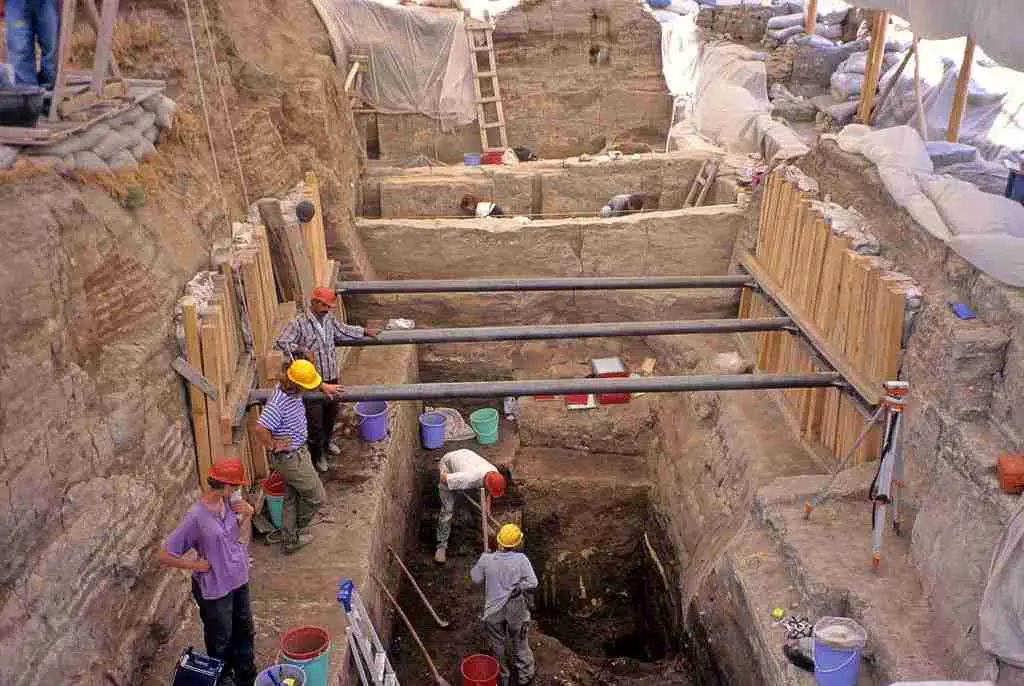
Çatalhöyük is a Neolithic settlement located in Central Anatolia, Turkey. It is one of the most important archaeological sites in the Near East and was inhabited from around 7500 BC to 5700 BC.
What makes Çatalhöyük so unique is its painted skeletons.
Burial Rites at Çatalhöyük
The inhabitants of this settlement practiced a unique burial ritual that involved painting the skeletons of the deceased with red ochre (all genders and ages, including children), cinnabar (for males only) and blue/green (for females only). The red ochre that was used to paint the skeletons is thought to have had symbolic significance and may have been used to ward off evil spirits or to mark the graves of important individuals.
The bones were partially painted and excavated several times. The houses in the settlement contain archaeological evidence of these religious rituals, including intramural burial sites with some individuals displaying traces of colorants and matching wall paintings.
A glimpse into the past
The painted skeletons of Çatalhöyük are a fascinating glimpse into the lives of the people who lived there 9000 years ago, giving us a rare opportunity to learn about the burial rituals of a prehistoric culture.

Claudine Cassar began her professional journey in business, earning a BSc in Business and Computing from the University of Malta, followed by an MSc in International Marketing from the University of Strathclyde and an MPhil in Innovation from Maastricht Business School. At the age of 23, she founded her first company, which she successfully sold to Deloitte 17 years later.
At 45, Claudine made a bold career shift, returning to university to pursue a degree in Anthropology. Three years later, she graduated with a BA (Hons) in Anthropological Sciences. In 2022, she published her debut book, “The Battle for Sicily’s Soul.“